
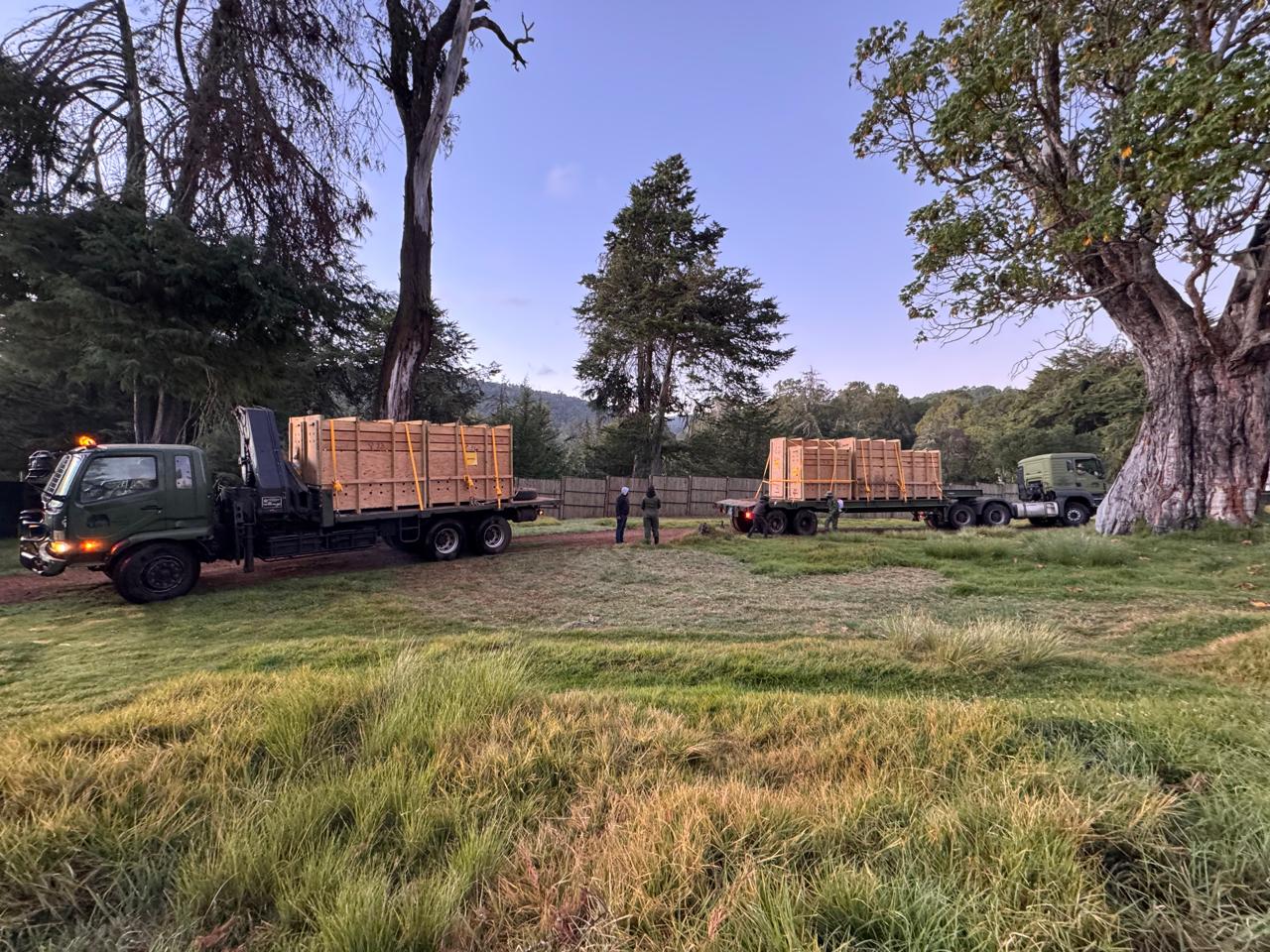

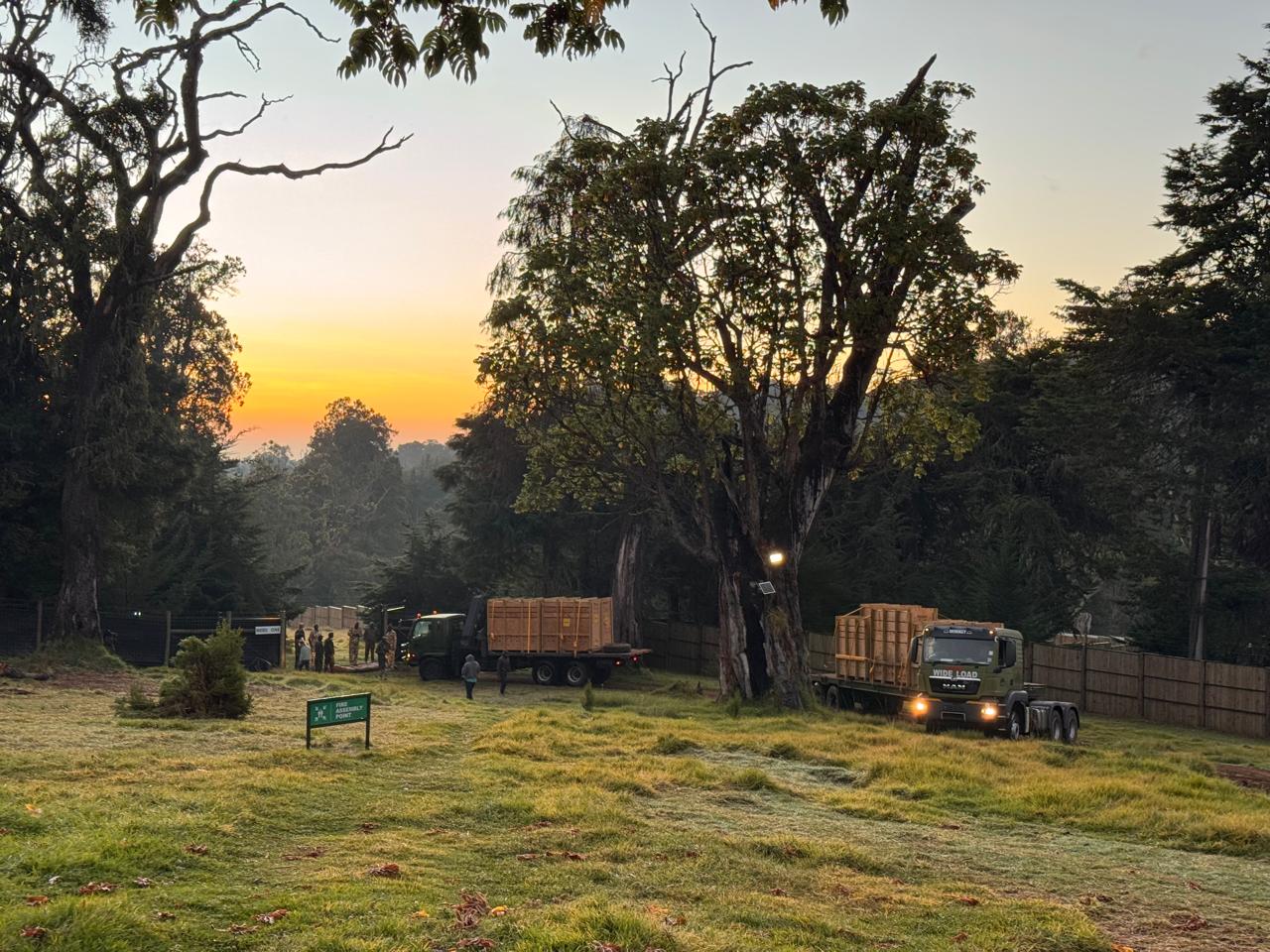
Nairobi, February 24, 2025 – In a landmark event for wildlife conservation, Kenya yesterday evening (23.02.2025) received 17 mountain bongos from the Rare Species Conservatory Foundation (RSCF) in Florida, USA. The arrival of these critically endangered animals marks a significant milestone in the ongoing efforts to restore the mountain bongo population in Kenya, their only native homeland.
The mountain bongo, a subspecies of the antelope family, is one of Kenya’s most iconic and endangered species. Once thriving in the highland forests of Kenya, their population has declined drastically over the past five decades due to habitat loss, poaching, and disease. Today, fewer than 100 mountain bongos remain in the wild, making this repatriation effort a critical step toward their survival.
The historic repatriation is the result of a collaborative effort between the Kenya Wildlife Service (KWS), DHL, Kenya Veterinary Services, the Meru County Government, the Meru Bongo and Rhino Conservation Trust (MBRCT), Lewa Wildlife Conservancy, and the Rare Species Conservatory Foundation (RSCF). The initiative is part of the National Recovery and Action Plan for the Mountain Bongo, which aims to increase the population to 750 individuals over the next 50 years.
The 17 bongos (12 females and 5 males) will form a founder population at the Marania and Mucheene sanctuary in Meru County. The sanctuary, established through a partnership between KWS, MBRCT, and local communities, will serve as a breeding and rewilding centre, with the ultimate goal of reintroducing the bongos into their natural habitats.
Speaking during the reception at Jomo Kenyatta International Airport (JKIA) in Nairobi, Hon. Rebecca Miano, the Cabinet Secretary for Tourism and Wildlife, emphasized the importance of the initiative. “The return of these mountain bongos is not just a conservation success; it is a symbol of hope and renewal for Kenya’s biodiversity. This initiative demonstrates what we can achieve when we work together—across borders, disciplines, and communities.”
Prof. Erustus Kanga, the Director General of Kenya Wildlife Service, highlighted the alignment of the project with the KWS corporate Strategic Plan 2024-2028. “This initiative reflects our commitment to biodiversity conservation, community engagement, and partnerships. It is a testament to the power of collaboration in achieving our conservation goals.”
The Marania and Mucheene sanctuary is not only a conservation hub but also a source of economic opportunities for local communities. Through tourism, employment, and capacity building, the project aims to empower communities and foster a sense of stewardship for Kenya’s natural heritage.
Upon arrival, the bongos were transported to the Marania and Mucheene sanctuary, where they will be placed in an isolation facility for at least three months. During this period, they will undergo close monitoring and acclimatization to their new environment. Technical experts from RSCF will remain on-site to provide guidance and support during this critical phase.
The repatriation of these mountain bongos is a reminder of the importance of conservation and the need for collective action. The Kenya Wildlife Service and its partners called upon all stakeholders—government, private sector, communities, and international collaborators—to continue supporting this initiative and other efforts to protect Kenya’s wildlife.
About the About the Mountain Bongo
The mountain bongo (Tragelaphus eurycerus isaaci) is a critically endangered subspecies of the bongo antelope, found only in Kenya. Known for their striking reddish-brown coats and white stripes, mountain bongos play a vital role in the ecosystems of Kenya’s highland forests.




 English
 Arabic
 Chinese (Simplified)
 Dutch
Dutch French
 German
 Italian
 Portuguese
 Russian
 Spanish
 Swahili
Leave A Comment